
Article: How to Choose a Sofa Online: Do You Really Need to Sit on It First?
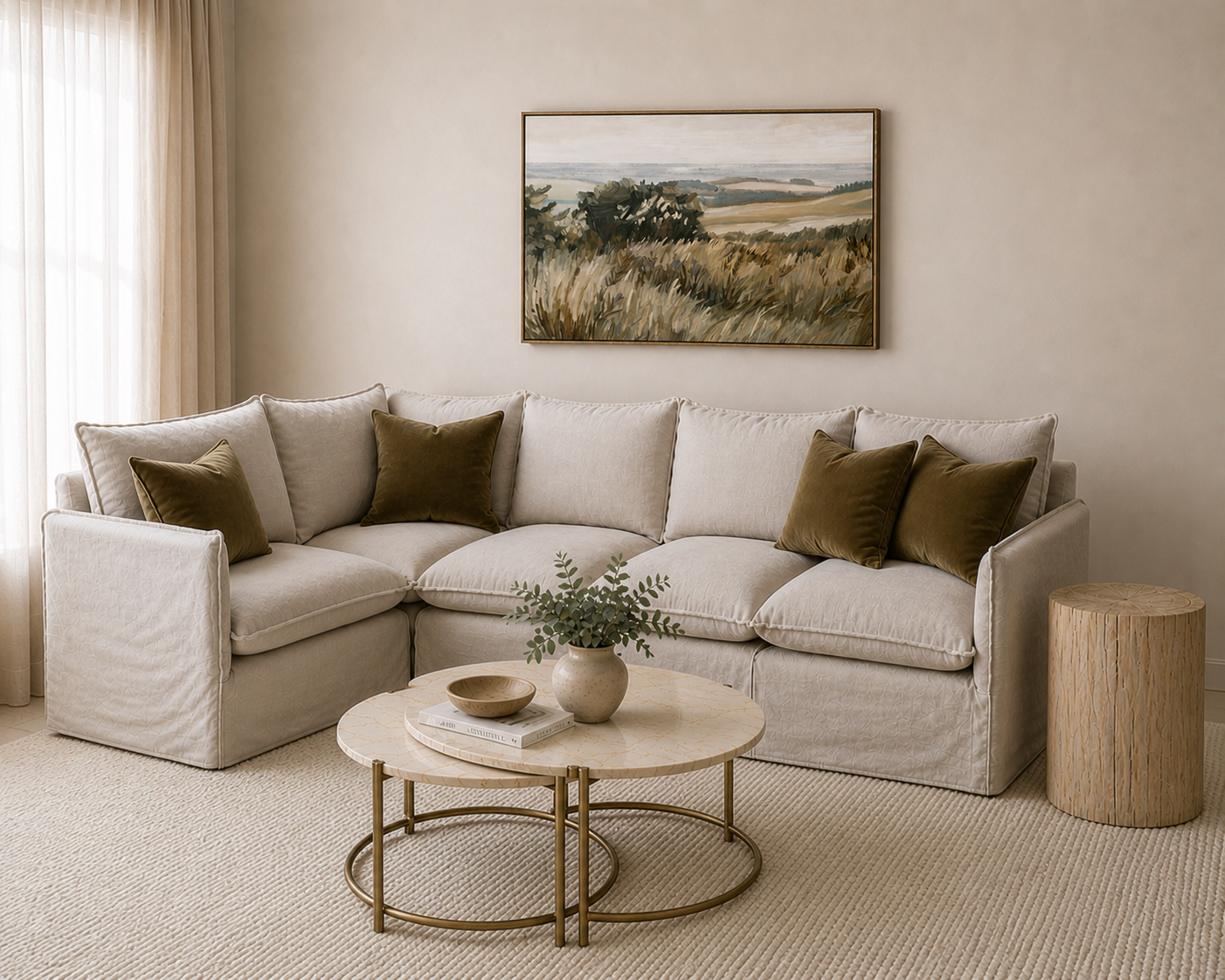
How to Choose a Sofa Online: Do You Really Need to Sit on It First?
One of the questions we are often asked at IDO Home is, “How can I buy a sofa online without sitting on it first?”
The short answer is: you don't necessarily need to sit on a sofa before buying it.
While trying a sofa in person can be helpful, sitting on one for a few minutes in a showroom doesn't necessarily tell you how well it will suit you, your home or the way you actually live.
When choosing a sofa or couch online, there are several things you can look at — including its dimensions, seat proportions, cushion construction and upholstery — that can tell you a great deal about how it is likely to feel and whether it will work in your space.
What actually makes a sofa comfortable?
Comfort is personal.
Some people prefer to sit upright with their feet on the floor. Others like to curl their legs underneath them, lounge back or lie along the sofa to watch television.
Your height and proportions also make a difference. A deep seat that feels wonderfully relaxed to a tall person may leave someone shorter struggling to comfortably reach the floor.
That's why, rather than simply asking “Is this sofa comfortable?”, we think a better question is:
“Is this sofa going to be comfortable for the way I like to sit?”
Look at the seat depth and height, overall depth, back height and style of the cushions. Together, these provide useful clues about whether you're looking at a more upright, supportive sofa or a relaxed design made for lounging.
What sofa measurements should I check?
Don't rely on the photograph alone. Two sofas that look similar online can feel very different once you compare their dimensions.
Pay particular attention to:
- Overall width – the total space the sofa will occupy from side to side.
- Overall depth – the measurement from the very front to the very back of the sofa.
- Seat depth – the usable seating area from the front of the seat to the back cushion.
- Seat height – particularly important if you prefer a more upright seat or find very low furniture difficult to get in and out of.
- Overall height – useful for understanding the visual scale of the sofa and the amount of back support it may provide.
It's also important not to confuse overall depth with seat depth. A sofa with a generous overall depth may have substantial back cushions, so always check the individual measurements provided.
How do I know if a sofa will fit my room?
Don't guess the scale — measure it out.
This is one of the most useful things you can do when buying a sofa online.
Take the dimensions from the product page and use masking tape to mark the sofa's footprint on your floor.
Then stand back.
Look at it from the doorway. Walk around it. Consider where your coffee table, occasional chairs and other furniture will sit.
You're not simply checking whether the sofa technically fits between two points. You're seeing how much physical and visual space it will consume.

As a general design starting point, a sofa measuring somewhere around two-thirds of the width of the wall behind it can often create pleasing proportions. But this isn't a rule that needs to be followed precisely. Windows, doorways, side tables, architectural features and the overall furniture arrangement all influence what will look balanced in a particular room.
How much space should I leave around a sofa?
Think about how people need to move through the room.
For a main circulation route, approximately 45–60 cm of clear space can be a useful starting point, with more space preferable where the room allows.
The distance between your sofa and coffee table is different. You want the table close enough to comfortably reach from the sofa while still leaving enough room for your legs and to move around it.
There isn't one measurement that works for every room. The important thing is to consider how the space will actually be used, rather than simply whether all the furniture fits.
What should I look for in sofa cushions?
The internal construction of the seat and back cushions can tell you a lot about how a sofa is likely to feel.
Where specified, high-resilience (HR) foam is designed to provide support and recover its shape after use. Other sofas may combine foam with fibre, feather or other fillings to create a softer and more relaxed sitting experience.
Neither is automatically better — they provide different levels of support, softness and maintenance.
A softer, more relaxed cushion may require regular plumping and reshaping, while a firmer foam cushion can provide a more structured appearance and feel.

Our Freddie Sofa is a great example of how generous cushioning and a deeper profile can create a more relaxed style of seating.
For a different approach our Villa modular sofa, which combines high-density foam seating with feather-wrapped cushions for a softer, relaxed feel. Its modular design also allows you to configure the sofa to suit your space.
At IDO Home, we try to provide as much information as possible about the construction of each sofa. However, manufacturers don't always supply details such as the exact foam density or internal cushion composition.
If we don't have that information, we'd rather tell you than guess.
Does the sofa frame matter?
Yes. The frame provides the underlying structure of your sofa and contributes to its durability and longevity.
Where the manufacturer provides construction information, look for details about the frame materials and internal support.
Solid timber can be an indication of quality construction, although well-made furniture can also incorporate quality engineered timber and other materials.
Again, not every manufacturer provides the same level of technical information. If a particular construction detail is important to you and it isn't shown on the product page, ask before purchasing.
How do I choose the right sofa fabric?
It's easy to focus on colour, but the performance of the fabric is just as important.
Look at the fabric composition and, where available, its Martindale or rub-test rating, which provides an indication of the fabric's resistance to abrasion.
Then consider how the sofa will actually be used.
A sofa in an occasional sitting room has very different demands from the main family sofa used every evening by adults, children and pets.
Consider lifestyle, maintenance, sunlight and how forgiving the colour and texture will be in your household.
A beautiful fabric still needs to be appropriate for the way you live.
Compare it with a sofa you already know
One of the easiest ways to buy a sofa online with greater confidence is to use a sofa you already know as your reference point.
If you own — or regularly sit on — a sofa that you find particularly comfortable, measure it.
Check its overall depth, seat depth, seat height and back height. Think about what you like about it.
You now have your own personal benchmark against which you can compare the specifications of a sofa online.
The opposite is equally useful.
If you don't like your existing sofa, ask yourself why.
Is the seat too deep? Too shallow? Too low? Is the back too upright? Do you disappear into very soft cushions when you'd prefer more support?
Knowing what you don't like can make choosing your next sofa much easier.
Quick checklist: What should I check before buying a sofa online?
Before ordering, ask yourself:
- Have I checked the overall dimensions?
- Have I checked the seat depth and seat height, if provided?
- Have I marked the sofa dimensions out on my floor?
- Is there enough room to comfortably move around it?
- Does the seating style suit the way I like to sit?
- What do I know about the cushion construction and firmness?
- Is the fabric suitable for my household and lifestyle?
- Have I compared the measurements with a sofa I already know?
- Have I checked access into my home, including doorways, stairs and tight corners?
- Is there anything important that isn't listed on the product page that I should ask about before ordering?
So, can you confidently buy a sofa online?
Yes — provided you do your homework.
Sitting on a sofa can certainly be helpful, but it isn't the only way to make an informed decision.
Understanding the dimensions, proportions, cushion construction, upholstery and materials — and thinking carefully about how you like to sit and how the sofa needs to function in your home — can give you much more information than simply deciding whether a sofa feels comfortable during a few minutes in a showroom.
At IDO Home, we try to provide as much useful information as possible about the sofas we sell so you can make an informed decision when shopping online.
And if there's something you need to know that isn't shown on a product page, ask us. If the information is available from our supplier, we'll do our best to find it for you.
Ready to find the right sofa for your space? Explore our collection of sofas online.